
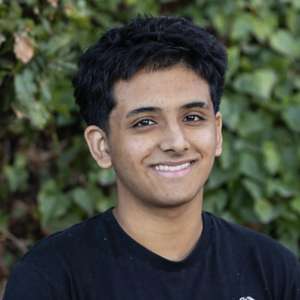
Rohail Kahn
The Difficult Journey to Understanding my Brother
My relationship with my brother was unusual for siblings – it was shaped not by interactions, but by shared silences. Faraz was ten years older, often away at school or out of the house. When he was around, we found quiet ways to connect – camping trips with my dad, video games, and snacks after school. My parents weren’t around much.
A month after I was born, my father was incarcerated at the San Quentin prison for criminal charges because he killed a man in a driving accident. My brother was in the front seat, traumatized by the incident.
My mom used to work 16-18 hour shifts as a nurse. At home she could not cope and had emotional outbursts with yelling that created an intense and difficult environment for us.
I sometimes felt invisible at home, but when I was with my brother, I felt seen, and I trusted him. Deeply. He was my rock.
Until he wasn’t. The first time I noticed a change, he told me not to look at him – said my eyes were infected. I thought he was kidding; I laughed, waiting for his punchline. But it never came. Instead of laughter, I saw fear in his face. And something cracked between us.
He got expelled from college because he drew graffiti and slurs on the campus walls and started living at home. He scribbled all over his bedroom walls with pencil, journals filled with rants about his expulsion in dark graphite. There were nights he’d scream, or go missing, or get hospitalized under 5150 holds, which is a term for placing a 72-hour psychiatric hold on individuals who pose a danger to themselves and/or other people.
Words were thrown at me – schizophrenia, bipolar, 5150. I was only twelve. I didn’t know what these words meant, but I stored them in my memory. All I was certain of was that the brother I knew was no longer there.
I pretended nothing was happening. When Faraz threw a battery at me and split my forehead open, I kept quiet. I scrubbed the blood off my hoodie sleeve in the bathroom, then sat back down to finish my history homework. I didn’t know what else to do. My parents, too, were paralyzed by what was happening, and remained silent.
When the silence became too heavy for me to carry alone, I started writing. At first, it was just a notebook where I kept track of what I saw and felt. Eventually my writing uncovered how distant I felt from my family as Faraz’s illness was destroying us. The more I wrote, the more I found my voice. I started asking questions about the brain, illnesses, how families fall apart and still find a way to sit at the dinner table together. By high school, my reflections became more focused. I sought answers not to escape my past, but to make sense of my present, and hopefully rebuild my relationship with my brother.
Through this search for answers, I found out what my parents had been keeping from me for all these years: my brother had schizophrenia. Once I realized his diagnosis, I dug deeper. My journal turned into a blog, leading to a published article (1) about my experience with the International Society for Schizophrenia Research. I cold-emailed a UCSF medical student/doctoral candidate working on schizophrenia research. My brother was a smoker, and I asked if I could assist with his study on the connection between smoking and schizophrenia. We worked together for two years, and our findings were published.
When I was younger, I didn’t have the language to describe what was happening at home. In those moments, I’d turn to prayer, whispering to God because even if I couldn’t make sense of it, I believed God could. That act of surrender shaped how I now approach science as a practice of listening, of patience. Five years later, I don’t flinch at the word “vulnerable.” I understand that telling the truth about the burdens we carry is a form of strength. I have learned that families are complicated, pain doesn’t always look clear, healing isn’t linear, and it all begins with self-awareness.
It’s been a decade since I talked to my brother the way we once did. He is still in and out of hospitals. I call him weekly and visit him monthly.
I hope that by better understanding schizophrenia, I will one day be able to sit across from him again and achieve what I’ve always wanted – a chance to truly reconnect.
My brother currently takes antipsychotic medication such as Abilify and Risperdal, but we are looking for a newer, more effective medication, such as clozapine.
By working with The CURESZ Foundation, my family and I seek to better understand emerging treatment options, access reliable clinical guidance, and advocate for care that looks beyond symptom management to quality of life.