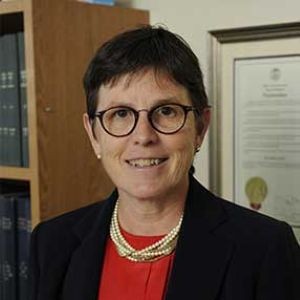
Carol North, MD
The importance of Language for Psychiatry
By Carol North, MD, MPE, DLFAPA
Adjunct Professor in Psychiatry (volunteer), The University of Texas Southwestern Medical Center, Dallas, TX, USA
Members of older generations learned standard rules of grammar in elementary school. The main offender I recall hearing in those days was the word “ain’t” to mean “is not.” The word ain’t has never emerged as accepted standard language and is not part of formal scientific writing. I also remember learning to say, “He and I went…,” rather than “Me and him went….” There are 2 grammatical problems with “Me and him went…”: 1) passive (object) pronouns are reserved for indirect (received) transactions, whereas active (subject) pronouns are used for direct actions,1 and 2) reference to the other person properly precedes reference to self.2 Based on these rules, it would be incorrect to say, “Me and him went to the store” but correct to say, “He and I went to the store.” It would also be incorrect to say, “The teacher gave he and I each a book” but correct to say, “The teacher gave him and me each a book.” Lately I have been hearing grammatical aberrations on these rules with appalling frequency in circumstances where you wouldn’t expect them (such as from the mouths of national news commentators). This has led me to the sad realization that the grammatical Pandora is out of the box and probably won’t be going back inside anytime soon (or ever). Changes in common language usage are accelerating at dizzying speeds.
Consonant with the above recent trends in popular language, the language of medical specialties has also been changing with amazing rapidity. Experts in psychiatric nosology—the science of classification and diagnosis of psychiatric disorders—understand that formal terminology is essential to the conceptualization and understanding of foundational psychiatric constructs. The American Psychiatric Association has been responsible for formally defining psychiatric illnesses since 1952 (American Psychiatric Association, 1952), and during the ensuing decades, the formal name for reference to psychiatric illnesses has been “mental disorders.” By at least 1990, however, rogue phrases had begun to creep into psychiatric terminology. A noteworthy example is the cringe-worthy term “mental health disorder.” Joining the word “health” with words implying pathology (“disorder,” “diagnosis”) to create phrases such as “mental health disorder” and “mental health diagnosis” is oxymoronic. The words health and illness conceptually don’t belong together. Combining words for health and illness into a single entity is not the style of terminology for other medical specialties: for example, diseases of teeth are not “dental health disorders” and heart diseases are not “cardiac health disorders,” but rather dental and cardiac disorders respectively. Because psychiatry is a branch of medicine (Guze, 1978), there is value and utility in following these broader medical conventions.
The last few decades have witnessed an alarming increase in terminology joining health and disease, in both lay and medical usage. I lamented about this trend in a scientific article I recently coauthored (North and Pfefferbaum, 2022). In my published article, I facetiously suggested the most absurd example I could imagine to illustrate the ultimate in preposterous terminology: “mental health illness.” Lo and behold, in the last month, to my astonishment, I heard not just 1 but 2 different national news commentators on different networks utter those exact words, “mental health illness.”
Such distinctions may strike lay readers (and mental health professionals as well) as the unnecessary product of nitpicking over terminology. But, in psychiatry, words matter. Language referring to mental illness is a reflection of our understanding on a fundamental level and drives how we behave toward people with psychiatric disorders. I imagine that the recent changes to common phraseology referring to psychiatric illness must be driven, at least in part, as an effort to combat the stigma of mental illness. Inserting the word “health” after the word “mental” may have been meant to soften the blow of psychopathology for those who cannot bear any mention of mental illness. If anything, however, this convention confirmed that for many people mental illness is too awful to validate by even acknowledging it. By avoiding its mention, we inadvertently further stigmatize it.
Given all this, what are we to do? Ideally, I’d like us to ratchet our language back to its previously intended form. However, it seems the language train has already left the station years ago, and that is not likely. Regardless, we can be leaders in mounting a campaign to re-insert proper terminology in our language and alerting others to the dangers of language creep in psychiatry. I’d like to invite others to weigh in with their own observations and thoughts about psychiatric terminology, and perhaps a discussion on this topic can start here.
“Dr. North’s article is both interesting and cogent for our field. I have thought about this issue (mental health disorders as an oxymoron) a million times. I also recall joining a group of psychiatrists many years ago demanding that NIMH (National Institute of Mental Health, established n 1949) be renamed as National Institute of Mental Illness, to no avail.” Henry Nasrallah, MD
Notes
1He and I are subject (i.e., active) pronouns, but him and me are object (i.e., recipient/passive) pronouns. A simple test to know which pronoun to use is to strip one person from the sentence and see if it makes sense. For example, “He went” and “I went” are grammatically correct; “Him went” and “Me went” are grammatically incorrect.
2“I and he” (active) and “me and him” (passive) are grammatically incorrect because the other person should precede the first person.
References
American Psychiatric Association (1952). Diagnostic and Statistical Manual of Mental Disorders, First edition. Washington, D.C.: American Psychiatric Press, Inc.
Guze, SB (1978). Nature of psychiatric illness: why psychiatry is a branch of medicine. Comprehensive Psychiatry 19(4):295-307.
North, CS and Pfefferbaum B (2022). The need to clarify professional terminology in psychiatry. Annals of Clinical Psychiatry 34(3):149-151.